Permanence / Transience #Diaspora Botanica
by Alessio Murrone
Short Abstract
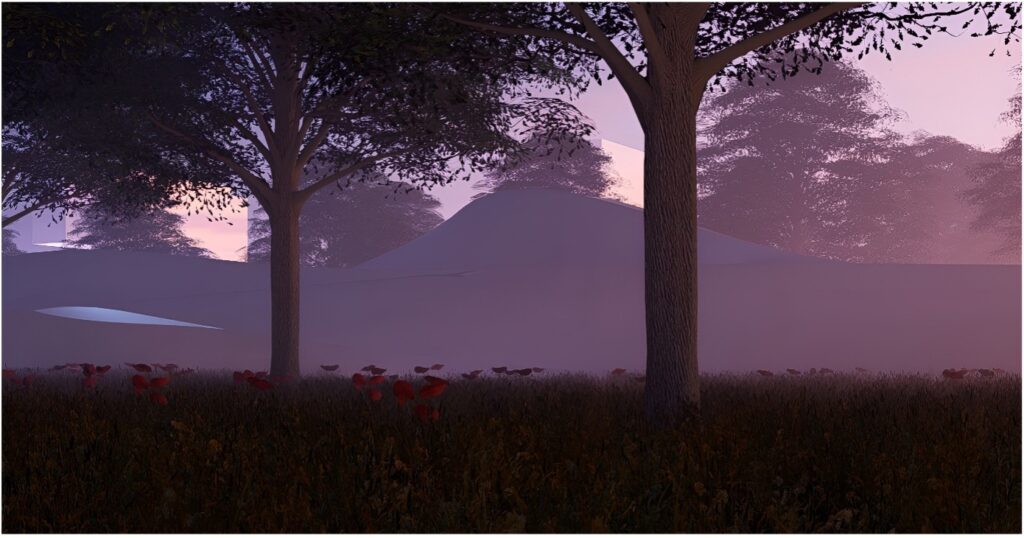
A philosophical spatial study translating two opposing temporal conditions into architectural form: endurance and transience. Botanical matter becomes a test field: scanned, abstracted, parametrized, and placed back into landscape. The work examines how belonging shifts between resilience, erosion, and the traces time leaves in space.
Project description
The project operates as a back-and-forth engineering study that uses botanical matter as a field of analysis. It explores permanence and impermanence as spatial conditions rather than opposites. The prickly pear cactus stands for endurance and temporal continuity, while driftwood / a weathered trunk represents time as an imprint. Erosion, decay, and return. Through abstraction and translation, both poles are detached from their original context and reoriented in space.
Journey
The project follows a process-based methodology: close observation and reference comparison sharpen the eye before anything is produced. Selected precedents are used as research material—read in reverse to clarify spatial logics before translating them through the botanical scan. Botanical matter is scanned / photographed, then translated into sketches to extract an essence rather than a copy.
This essence is evaluated against architectural precedents, reduced, and converted into a rule system. Parametric tools test density, porosity, layering, and structural rhythm, turning the study into a controllable architectural element (screen / relief / envelope).
metamorphosis
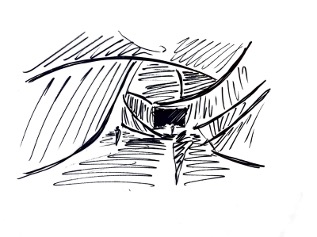
Metamorphosis is understood as translation: a botanical body migrates through media—and in doing so changes its meaning. A scan is not documentation, but a starting point. The drawing filters out what is essential. The system of rules organizes and makes things controllable. And only as an architectural element (screen / relief) does the translation become spatially legible.
In terms of content, the work presents a paradox: permanence and transience. The prickly pear stands for resistance—for a foreign being that remains and asserts itself. Driftwood or weathered wood stands for time as an imprint—for uprooting, transport, and repatriation. Architecture lies between the two: it seeks timelessness, even though aging always plays a role. Both poles reorient themselves in space: belonging does not appear as a fixed category, but as positioning—as a spatial condition that shifts.
architecture
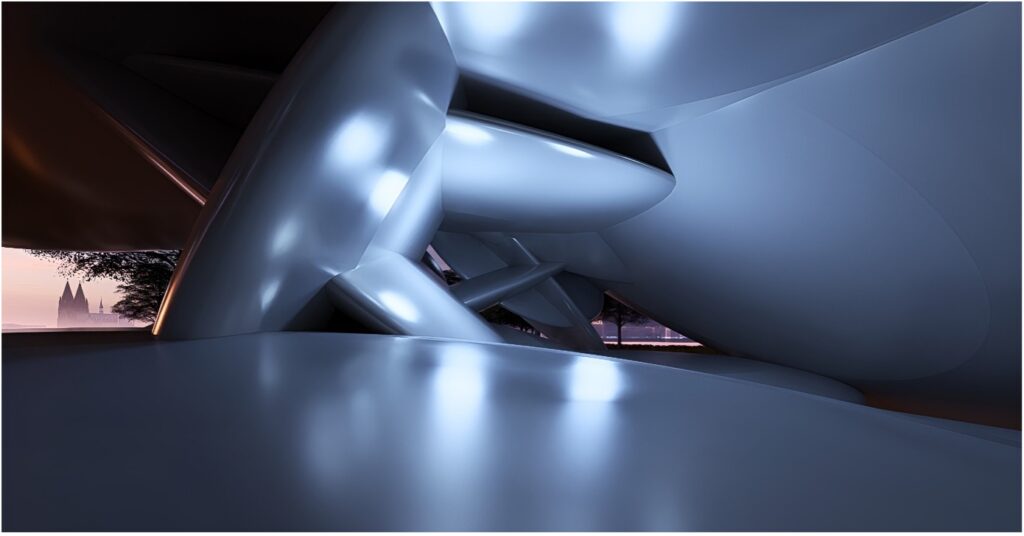
The architectural output is conceived as an iterative translation rather than a fixed object. Forms are tested as spatial elements (screen, relief, envelope) where density, porosity, and layering can be tuned without losing the underlying botanical logic.
Placed back into a landscape context, the project becomes a field test: the translated forms negotiate between resistance and erosion, between what asserts itself and what slowly dissolves. The parametric model functions as a mediating layer between observation and spatial speculation. It translates the qualities of the body into adjustable systems, allowing form to shift without losing its internal logic. Parametrization keeps the model in a state of becoming.
principle
The project is guided by the tension between permanence and impermanence, understanding time as a dual condition. Permanence appears as resistance, storage, and timelessness, while impermanence manifests through erosion, imprint, and gradual transformation. This contrast generates a spatial field in which questions of what remains and what dissolves are translated into architectural concepts such as porosity, layering, and filtering.
The methodology operates as a back-and-forth engineering process, a bidirectional exchange between analysis and design. References and natural forms are read in reverse to uncover underlying material and structural logics, while scans and observations are translated forward into lines, rules, and architectural elements. This continuous feedback loop sharpens the spatial logic, allowing form to emerge through iterative verification rather than linear progression.
References
CadMapper. (n.d.). CadMapper
ArchDaily. (n.d.). ArchDaily
Betsky, A. (2017). The Complete Zaha Hadid: Expanded and Updated. Thames & Hudson.
Hemmerling, M., & Tiggemann, A. (2011). Digital Design Manual. DOM publishers.
project member info
Alessio Murrone is an architecture student based in Cologne, currently studying in the Master’s program Corporate Architecture at TH Köln. His work explores process-driven design methods, translating natural references through drawing, parametric rule systems and spatial propositions. He is part of the Space+ team. A lab focused on hybrid and immersive spatial environments. Alongside his studies, he works at HKR+ Architekten in Cologne.
Contact / social:
https://www.instagram.com/studi0.am_?igsh=azVueHAzNHBpdmg3&utm_source=qr (Instagram Architecture), https://www.instagram.com/alessio_mr26?igsh=MXR0c2Zjc2RmMDl0bg%3D%3D&utm_source=qr (Instagram), https://www.linkedin.com/in/alessio-murrone-0363901aa/ (LinkedIn)