Forestry & Heritage in times of political crises #Diaspora Botanica
By Leon Bädorf, Max Kurth and Jan Jurek Waters
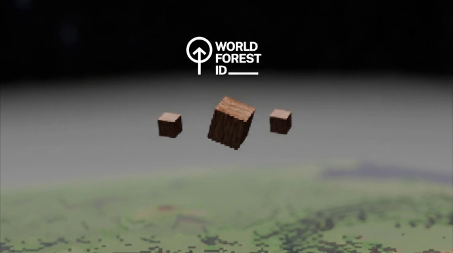
This video project visualizes the invisible chemical history of wood in our everyday furniture. Based on the research project World Forest ID, it demonstrates how stable isotopes and trace elements are used to scientifically distinguish "conflict timber" from Russia and Ukraine. The project highlights how research is utilized to label seemingly similar types of wood differently according to political narratives and societal constructs like borders and trade routes.
From chemical fingerprints of trees to the shelves in our living rooms: This video explores how research makes the traces of timber visible again, breaking through the anonymity of globalized commodities.
copyright: Leon Bädorf, Max Kurth, Jan Jurek Waters
At first glance, a wooden shelf in a bedroom seems like a simple, anonymous object – a familiar part of our home that remains silent. Yet, every material carries an invisible history. This video project reveals that hidden story, visualises the journey from wild tree to commercial product, and shows how modern science makes the traces, blurred by global supply chains, visible again. Rooted in current political crises, the project builds on the World Forest ID initiative, a global effort headquartered in the US and the Netherlands. Its international work connects chemical labs and compiles timber reference samples to fingerprint wood origins for tracking supply chains (Mortier et al. 2024).Lorem ipsum dolor sit amet, consectetur adipiscing elit. Ut elit tellus, luctus nec ullamcorper mattis, pulvinar dapibus leo.
Our video’s core narrative follows the journey of timber used in furniture, often transported from Eastern to Western Europe. It symbolically shows wood sample cubes sent to labs similar to those which would be sent in for chemical analysis. Based on the referenced paper, the project visualises the ability to reconstruct timber harvest regions. This explanation of the database’s functionality is layered with an abstract display of the ongoing conflict in the region, where national borders divide formerly connected forests, fragmenting them under different national “ownership”. The Russian incursion is also abstractly represented by the shifting of this border, highlighting how human wars disrupt our relationship with timber, also creating “conflict timber” as a sanctionable commodity. The second half of the video stresses the importance of traceability to enforce sanctions and regulate trade, notably due to attempts to falsely relabel sanctioned Russian timber as inter-European goods. The video illustrates border crossings and sawmill processing as deliberate attempts to erase the wood’s original heritage, making chemical fingerprinting the only reliable method of provenance verification.
Throughout our video, a gamified, low-poly art style provides an abstract, toy-like contrast to the grim realities of war and environmental damage. Combined with the serious tone of AI-generated narration, it underlines the objective science behind the story. While humans may manipulate labels and borders, the chemical truth of the wood remains its unchangeable record. The video concludes by showing furniture in a home, asking: “Would you consider the critical global issues connected to the material of your bedroom shelf?” This project and the World Forest ID research reveal that beneath the smooth surfaces of everyday goods lies a complex geopolitical and ecological story. Verifying the origin of timber is not just a technical task but a vital step to uncover the invisible history embedded in each wooden product.
Project Member Info
Leon Bädorf is currently pursuing a Bachelor’s degree in Integrated Design at the Cologne International School of Design. He has practical experience in graphic design and video editing, with a focus on clear and structured visual communication. His academic passion lies in the world of insects, including their biology, diverse characteristics, and benefits for humans. During his intermediate studies, he explored entomophagy, an investigation that strengthened his understanding of ecological interconnections and continues to inspire his design practice.
Max Kurth is studying for a Bachelor’s degree in Integrated Design at the Cologne International School of Design. He specialises in photography and videography, as well as 3D software. He completed a voluntary ecological year with the German Environmental and Nature Conservation Association (BUND), which raised his awareness of nature and environmental protection and served as inspiration for the project.
Jan Jurek Waters is a master’s student of architecture at the Cologne University of Applied Sciences in the specialisation spatial strategies which is centered on design research methodologies and socio-cultural change. He is a member of the core team which introduced the Timber Joinery Database research project, presenting it in several publications and university courses, including multiple practical workshops at TU Delft. Driven by his early interest in timber construction, he now focuses on generating wood-to-wood connections optimized for computer-aided manufacturing processes through parametric design methods.
References
Mortier, T., Truszkowski, J., Norman, M. et al. A framework for tracing timber following the Ukraine invasion. Nat. Plants 10, 390–401 (2024). https://doi.org/10.1038/s41477-024-01648-5 [https://worldforestid.org/insights/nature-plants-peer-reviewed-papera-framework-for-tracing-timber-following-the-ukraine-invasion]