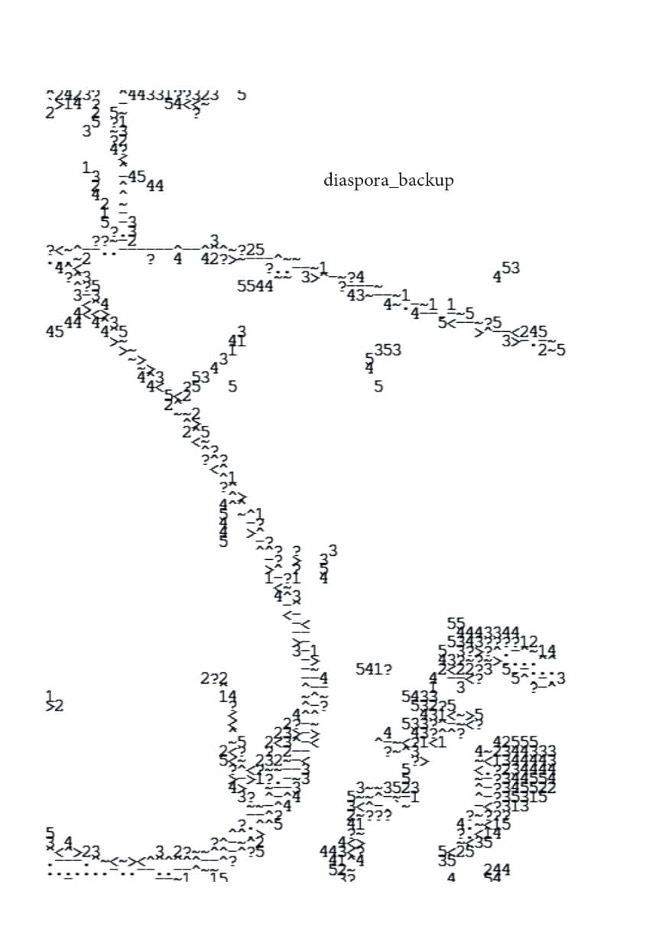
„diaspora_backup“ archives Cologne’s Otto-Langen-Quartier, a former industrial hub run by many „guest workers“. Just as people migrated here, non-native plants arrived via work boots and trains. Before renovation buries this history, we preserve these fading plant traces in a permanent digital ASCII archive.
Figure 1 Picture of a plant transformed into ASCII Code – Cover of the booklet. Copyright: Sascha Lüdtke, Charlotte Liebergesell
Anyone standing today on the post-industrial and long inactive factory grounds of the Otto-Langen-Quartier in Köln-Mülheim has to close their eyes to hear the noise of the past. For decades, the economic pulse of Mülheim and the surrounding area, like Kalk, beat within these massive halls. Yet, more compelling than the engines produced are the workers who built them. Thousands of “guest workers“ sought employment here, far from home, manning blast furnaces and assembly lines, which were jobs that fewer and fewer Germans were willing to do. But people are not like factory machines that can simply be switched off when the shift ends. They needed and shaped a place to live, eat, and talk. Keupstraße in Mülheim rapidly developed into one of the most famous Turkish commercial streets, providing for the local workers. Here they found a piece of home abroad. These workers, who originally intended to stay for only a few years, became neighbours. They moved out of cramped dormitories into the old apartments of Mülheim and Kalk, brought their families over, and put down roots. And not just metaphorically. Plants were brought here, too, seeds hidden in the treads of work boots or on freight wagons of trains arriving onto premises coming from abroad. Neophytes, non-native plants, found a home on these grounds, carrying their own history just as the workers did. It‘s exactly this that we aim to achieve with this project. We want to capture and preserve an honest moment of Diaspora before the city or investors decide to renovate the site and bury the history beneath it.
This video shows the transformed pictures into animated ASCII Code. Copyright: Sascha Lüdtke, Charlotte Liebergesell
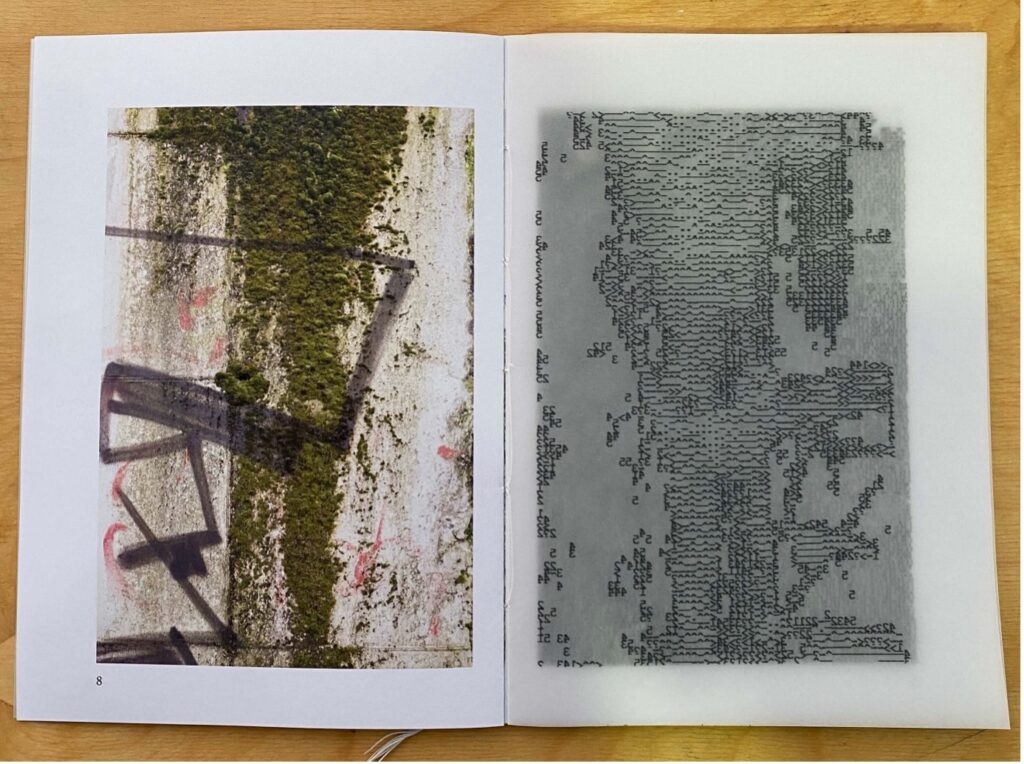
Figure 2 The booklet: on the left side is the original picture, which is transformed to ASCII Code on a transparent paper at the right side. Copyright: Sascha Lüdtke, Charlotte Liebergesell
Project Members
Charlotte Liebergesell (currently pursuing B.A. degree in Integrated Design at KISD),
Sascha Lüdtke (B.A. degree in Architecture, currently pursuing M.A. degree in Architecture – spatial strategies at TH Köln)